
Jo-Ha-Kyū | 序破急
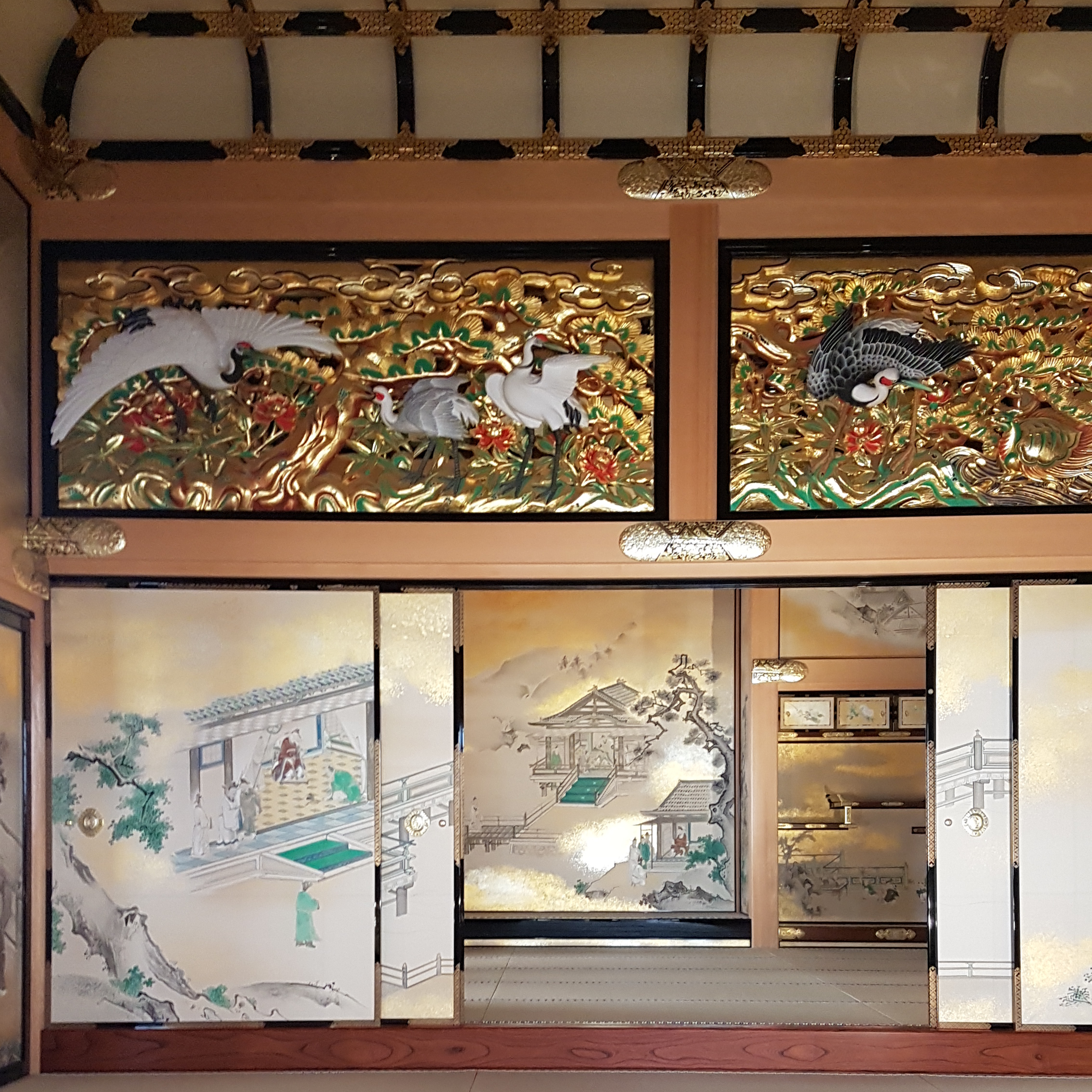
Jo-Ha-Kyū is one of the various storytelling styles from Japanese literature and arts invoked in ‘Violet.’ Jo-Ha-Kyū is conceptually similar to the three act structure but, perhaps more importantly, it creates a pace, often rapid, in the story to bring the reader to periodic narrative peaks. The peak may be a moment or twist that end suddenly, leaving the reader eager to re-examine what just happened and linger on the plot as the story progresses. The pace, or pattern, is most notably identified in the Deimos arc, Citadel arc, and experienced readers of literary fiction or Japanese literature will see it the overall narrative form as well. Japanese culture and arts students may be eager to see if the poetic form of Jo-Ha-Kyū shows up in the chapter and segment vignettes.
Kishōtenketsu | 起承転結
Somewhat contrasting Jo-Ha-Kyū, if you view it as a story structure, is the Kishōtenketsu “four-act structure.” Fans of Japanese literature and Japanese culture such as anime, manga, and games have, more likely than not, experienced this structure. It is something that, in literature analysis, breaks from the “traditional” three-act play or story. For that reason, the second act (Sho | 承) may feel like filler. That is one reason why ‘Violet’ weaves the pace setting of Jo-Ha-Kyū. The reader will see that ‘Violet’ has four segments and you might expect the four segments to track with the Kishōtenketsu “four-act structure.” If you dive deep enough you might find yourself examining the de-emphasis of conflict in Kishōtenketsu story structure with certain arcs and themes in ‘Violet.’ Sometimes the plot is internal, not external, or rather not as important to a narrative as you may expect. Subtle and fleeting character interactions may be more prominent in Japanese literature than other fiction but get ready to rework your expectation with this piece of literary fiction.
Tale of the Heike | 平家物語
Anyone who explores Japanese literature is bound to come across Tale of the Heike | Heike Monogatari | 平家物語. It is no large leap to see that Tale of the Heike is the literary gravity that brought together the proto-planetary disk of ‘Tales of the Aeons’ characters, setting, themes, and dynamics. Heike Monogatari is the stylized account of a war between two factions in Japan, however, it is more about the journey through life and death a set of characters experience with the good, bad, and ugly coming back around to extract their fee as told through Buddhist themes and parables. There are a handful of pillars in the enviable pantheon of Japanese literature and Heike Monogatari is top shelf. The anthology nature of the story, the pace of chapters, and the way a larger story is pieced together undoubtedly reflect in ‘Violet.’
Aesthetics
First, check out the link to scroll through a dozen foundations of Japanese literature and culture most prominent in artistic endeavors. Reading through ‘Violet’ will guarantee an encounter with most all of these aesthetics – most pounced is Yūgen | 幽玄. Yūgen serves as a marker for the doors, chapters, that definitely have more layers and interpretations than you notice on first reading. Yūgen is much more than concealing a subject, rather, it is the possibilities and potential that exist beyond the veil – see when back-lit clouds on a dark night conceal the moon. In a meta sense, the whole book is an artistic expression of Yūgen when you think how the Japanese literature and culture and juxtaposed with the form of “traditional” literary fiction. We encourage you to consider how various Japanese aesthetics reflect, such as Shibui | 渋い in the prose or dynamic of Violet and Kibou.

Ebisu | えびす
Ebisu is a top tier deity in Shintoism no matter how you measure it. First born of the Shinto creator deities of Izanami and Izanagi, supposedly punished with no bones or limbs due to Izanami’s transgression, Ebisu made the journey to overcome the struggle full-force. Ebisu was sent up towards the Ainu of Hokkaido in a boat with little more than a prayer, yet, grew to become a full-fledged god. Ebisu is quite the story of, regardless of one’s birth, there is a path to meet your innate potential and, perhaps the claims Izanami transgressed were too quick. In ‘Violet’ there is a boat named after Ebisu which serves as a ferry and home of a fisher of men. The motif of fishermen, fishing, and being lost on the waves (of the ocean or space) cannot be missed in ‘Violet’ alongside parables from Chinese and Japanese culture.
Japanese Creation Myth
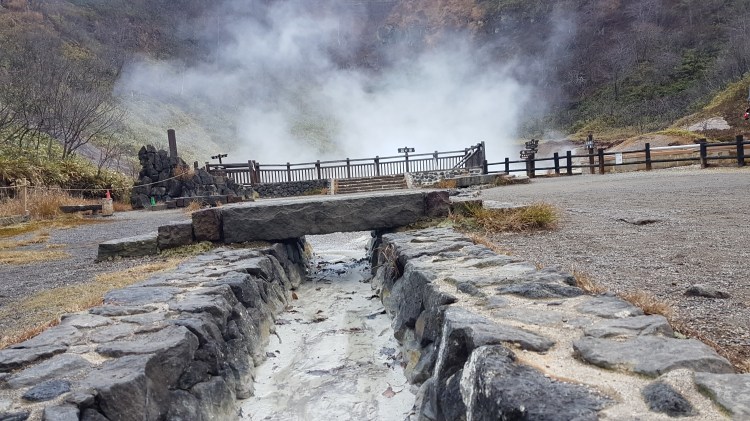
Shinto creator deities Izanami and Izanagi were not the first deities but they were the first of their kind, in that they created a new world. What happens when you have a sky of light under which is a dark world concealed from the light? You inevitably find a trio of primordial energy that set into motion the creation, molding of a new world. Now, consider the narrative of Violet, Kibou, and the Millennium Man in ‘Tales of the Aeons’ in relation to the cold, encased dark world of Earth with the shooting stars above that crack it open. Although the three main characters parallel three Buddhas, their overall dynamic reflects the creation process set out in the oldest pieces of Japanese literature and chronicles of Japanese culture.
Super-Frog Saves Tokyo
The author appreciates the tidbits of theme and narrative crafted by Haruki Murakami in the Japanese literary fiction collection “After The Quake.” In particular, ‘Super-Frog Saves Tokyo’ stands out as a near-metaphysical narrative where a dreamscape envelops an otherwise ordinary person with a sense of purpose and cause. Set under the weight of the Kobe Earthquake, this piece of literary fiction invokes a spirit of life. As a piece of Japanese literature, the story and characters evoke feelings of remoteness and absence vis-à-vis a major disaster. How does one engage with themself, the world, and the future when immense disaster demonstrates the insignificance of the individual? What dream evokes evolution of one’s spirit? In ‘Violet’ the reader will slowly come to engage with this type of questioning when the story transitions from distant conflict (the literary fiction layer) to the immediate, sensory conflict (the science fiction adventure).

Queen Himiko
Japan has a long history stretching back millennia, however, historic records are very much of the recent two millennia. One of the first histories of Japan, verified by outside accounts, is that of Queen Himiko. A ruler in her own right and bridge to the heavens. Possibly, one of the first historic empresses, Himiko represents the dynamism of early-Japan as a society structured with leaders in religion separate, sometimes combining with, political or governing figures. Those who study Japanese culture and imperial history will recognize this dynamic in the Yamato Dynasty’s traditional relationship as religious figures in the clouds above politics. As a woman leader, and religious interloper, Himiko is a real-world example of a symbolic shooting star in which people find themselves. This is a mirror of Violet herself in the later segments of ‘Tales of the Aeons.’ There is much more to say about Himiko as a character and spirit in Japanese literature but ‘Violet’ seeks to set up future interest in figures like Himiko within literary fiction or even science fiction adventures.
Matsuri
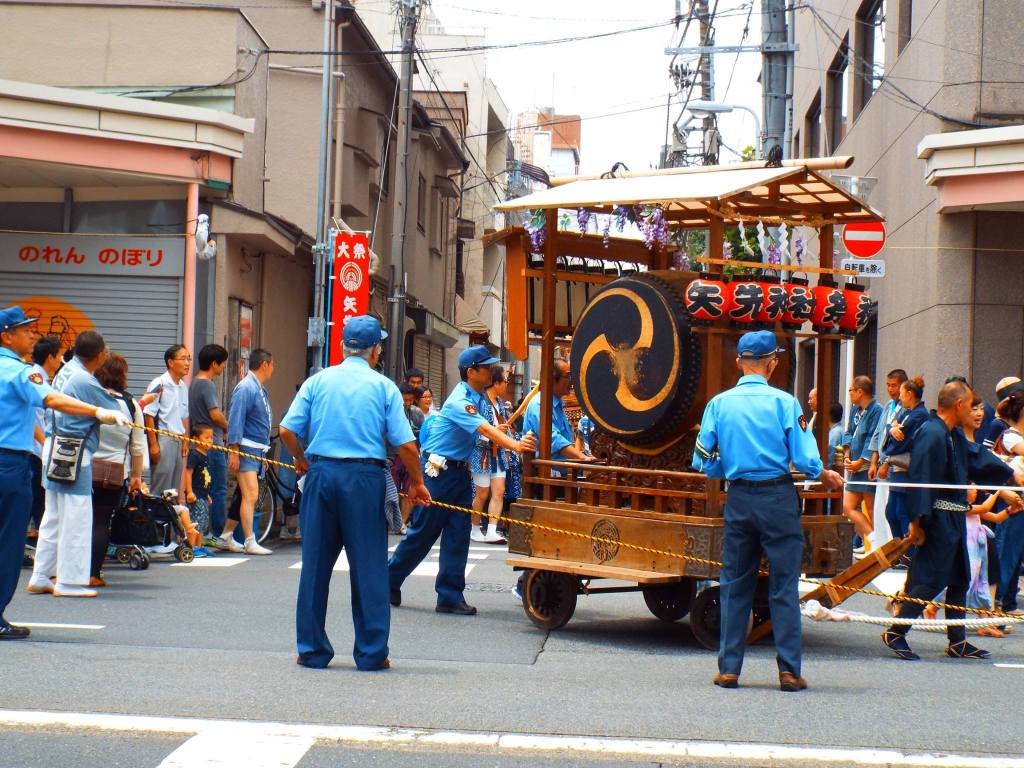
Matsuri, festivals, are an inextricable pillar of Japanese culture present throughout the history of Japan and memorialized in literature, anime, manga, etc. Each matsuri has a particular history and meaning. Because of that, matsuri practices and meaning are distinct. In recent years, the most notable matsuri feature a commercial or tourist element but that is not to erase the, often, Shinto or Buddhist practices at the heart. In ‘Tales of the Aeons,’ the practice continues on Luna, Mars, and across the human expanse. The novel opens on a unique expression of community with a matsuri celebrating Luna’s orbit back into the light of Sol. Note, Luna is locked facing Earth which means that side of Luna needs to wait a lot longer to exit the dark than night on Earth turns towards the dawn.
 Tales of the Aeons