As a literary science fiction novel Violet takes varied inspiration from the real world. Inspirations particularly come from Japanese literature and culture, East Asian history, and Buddhism. The science fiction elements draw from established technology and plausible developments relevant to a civilization settling the solar system. Violet handles these real world inspirations with due regard and taste, rather than as gimmicks or window dressing.

Prepare to be captivated as this novel weaves Japanese storytelling techniques and cultural aesthetics into science fiction. The narrative’s rhythm is influenced by Jo-Ha-Kyū, creating a dynamic pace that propels readers through moments of tension and release. The incorporation of Kishōtenketsu offers a refreshing departure from conventional conflict-driven plots, focusing on the natural dynamism of characters. Drawing inspiration from the classic Japanese literary epic, The Tale of the Heike, this literary novel delves into fate and the transience of life. Evoking Super-Frog Saves Tokyo, a modern marvel of Japaneses literature, this novel reckons with one’s place in the world amid disaster. These hallmarks of Japanese literature, and more, provide a contemplative backdrop to Violet’s adventure across the solar system. The presence of Yūgen as an aesthetic and philosophy adds layers of depth. The aesthetic elicits a deeper reading to ponder the unseen and the enigmatic layers within the story. The invocation of Yūgen as a philosophy saturates the plot and character dynamics, elevating the dynamism of individuals within their wider world. This fusion of Japanese literature and other cultural elements weave through the narrative that is both intellectually stimulating and emotionally engaging.
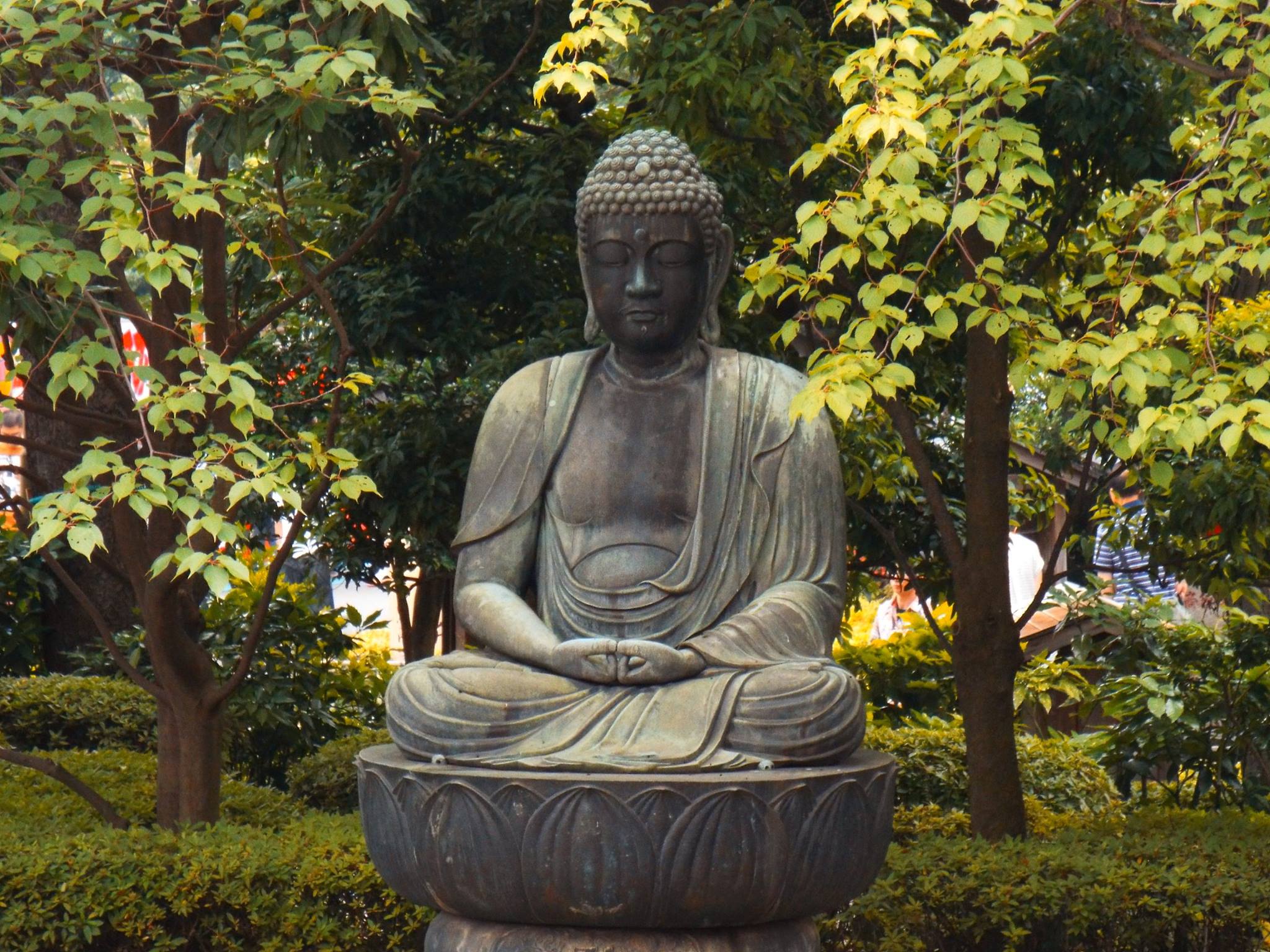
The novel Violet invokes Buddhist themes and philosophy in the plot and in the character dynamics. As a lens through which to view the plot, readers can turn to the poignant Parable of the Burning Home. This parable is an allegory and framework to understand the situation of Earth and humanity within the literary novel. The parable is also directly invoked by the characters to illustrate the difficulty of acting on behalf of another – when to do so and if one has suitable footing to do so. When the unenlightened can see the travesty, how can they act as an enlightened person would? Within the characters, particularly Violet, Kibou, and the Millennium Man, the reader may find unrefined qualities of the bodhisattvas Manjushri, Guanyin, and Vajrapani. Respectively these enlightened three can symbolize wisdom, compassion, and power. Violet is a literary novel of characters in motion, on a space adventure, undergoing change towards models such as these enlightened three. Straddling the plot and characters is the Buddhist concept of Mu. Mu, emptiness, challenging readers to ponder the nature of existence and the self. Mu is not “the cup is empty,” rather, Mu is about the impermanence and non-self unto which we ascribe permanence, self-ness, and definition. “I do not exist” is an insightful kōan to engage with. Violet transcends science fiction storytelling, offering a reflection for readers who enjoy an adventure and insight into spirit.

This science fiction novel takes root in emerging technologies to reconcile with the immense difficulty of space settlement. Violet is set in the near-future where humanity has expanded from Mercury to Mars. Each of these localities present survival issues, such as food and water cultivation to communication logistics. Violet deploys engineering solutions including a “skyhook” transit system, neural link implants, and amino-based food printing. The science fiction elements also feature in the plot’s key moments. Violet and Kibou share a neural link that bridges their consciousnesses in real time. What would happen to one’s mind if the other was silent? Meanwhile, in the background other technologies are extrapolated into a patchwork of mega-structures and concepts. The Kanzeon Arc Loop catches and brings intra-system travelers to a graceful halt above Mars. Perhaps tapping on the edge of hard science fiction is a relay of entangled particles that expedites communication across the void of space. The ubiquity of personal trans-human augmentation in this society also incites tension between those harmed and those enhanced. Nanobot clouds and lunar clothing to keep people on the ground further enliven the science fiction world of Violet. Also, humans are not born with purple hair and purple eyes, except for Violet herself. Is that not peculiar?
 Tales of the Aeons